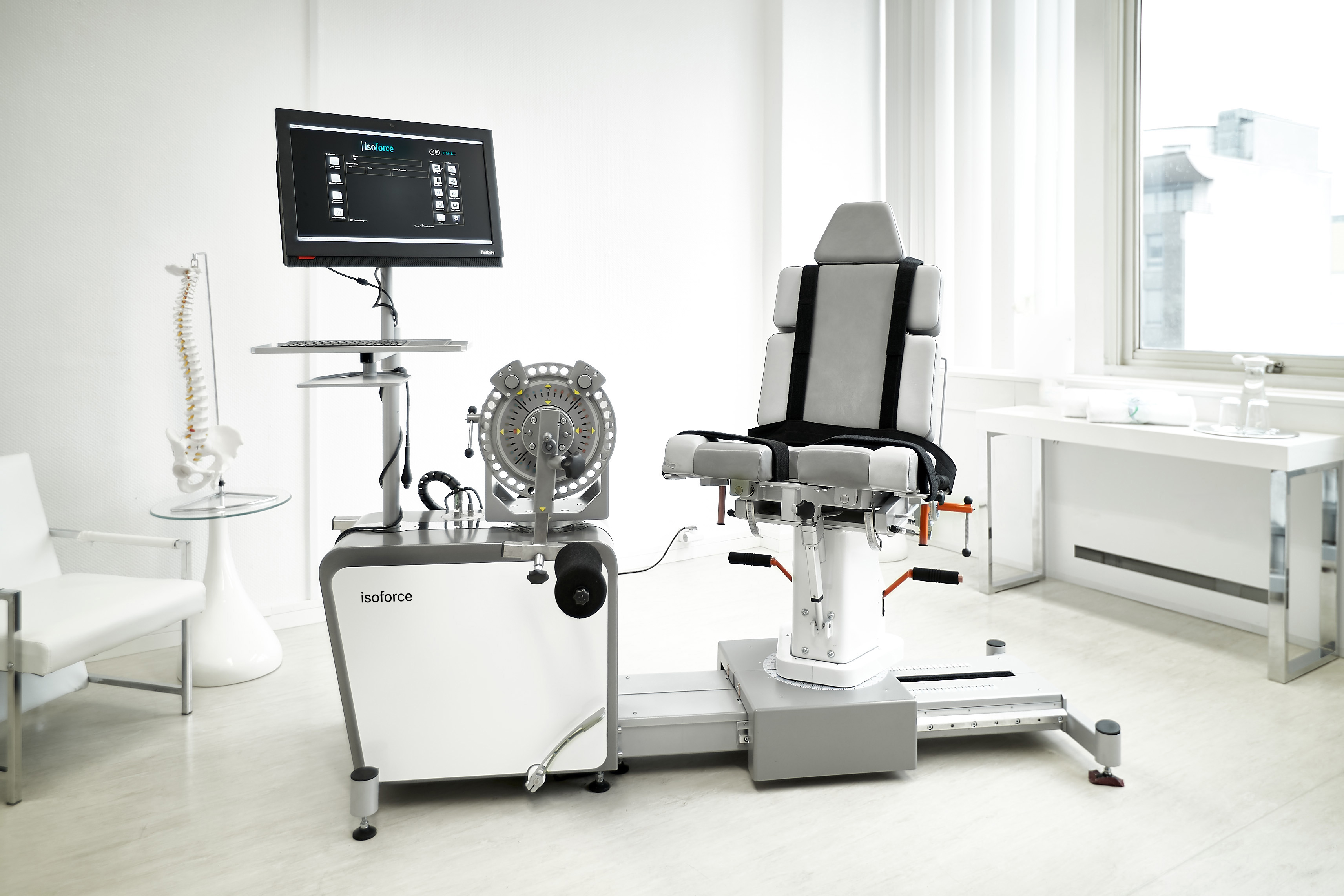
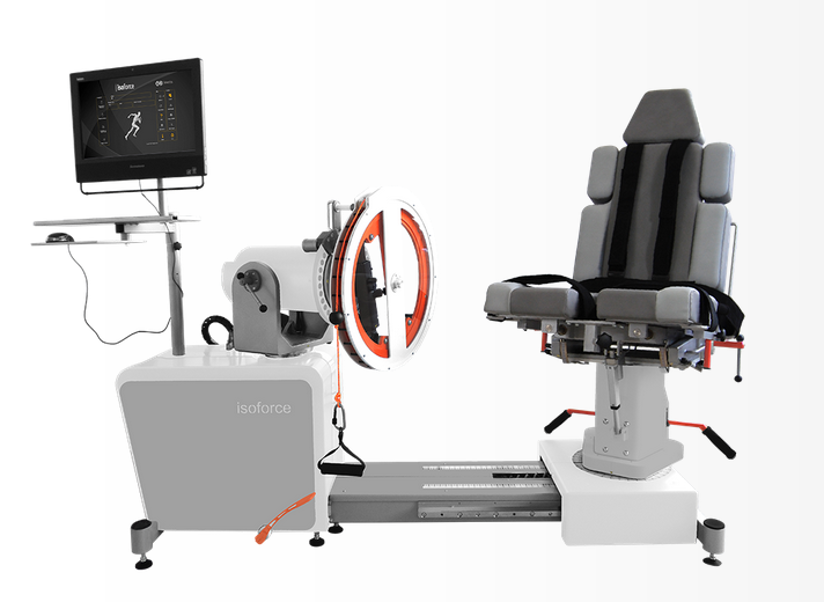
TUR Isoforce®
Isokinetic Dynamometry.
Isoforce is an advanced assessment and rehabilitation system that accommodates concentric and eccentric muscle actions under four primary resistance modes, allowing for objective neuromuscular capacity evaluation across a joint. It enables precise isolated muscle testing to optimize strength, restore coordination, and record longitudinal progression.
FHIR Observation Coding & Demographics Sync
By linking with the Nexus database layer, Isoforce transforms standard export datasets (peak torque, limb symmetry indices, and work curves) into HL7 FHIR-compliant structured reports. Observations are mapped using internationally recognized clinical standards.
Nexus FHIR Observation Mapping
To enable healthcare interoperability, biomechanical observations generated during Isoforce sessions are cataloged using specified clinical codes.
Maximum measured knee-extension torque produced during the specified test protocol and angular velocity.
Maximum measured knee-flexion torque produced during the specified test protocol and angular velocity.
Total angular displacement achieved across flexion/extension directions.
Subjective pain score logged during dynamic loading assessment.
Calculated percentage difference comparing peak force of injured and uninjured limbs.
Isoforce + Nexus Integration Review
A review of the integrated features, software mapping, and hardware performance metrics delivered by the Isoforce and Nexus system combination.
| Capability | Product + Nexus Integration |
|---|---|
| Isokinetic Testing | Device + HL7 / CSV & Native Nexus API |
| CPV Procurement Classification | 33158400 – Mechanical Therapy Unit |
| Tender & Lab Category | Testing and Rehabilitation System / Human Performance Lab |
| EHR Interoperability | FHIR R4 Native / HL7 Interop |
| Device Governance | Full SQL Registry + Version Control |
| Resistance Modes | Isokinetic, Isometric, Isotonic, CPM |
| Joint Patterns Deployed | 20+ Multi-joint movements |
| Legacy System Comparison | Outperforms legacy isokinetic equipment & traditional dynamometers |
| Max Angular Velocity | Up to 540°/s |
Why Leading Clinics Choose TUR Isoforce over Legacy Systems
- checkModern Modular Footprint: Eliminates bulky legacy chassis setups of traditional dynamometer units.
- checkNative Azure FHIR Interoperability: Automatically exports LOINC 72493-8 peak torque and LSI ratios directly to hospital EHR systems, unlike proprietary legacy software.
- check700 Nm Peak Torque Capacity: Full concentric and eccentric testing (Con/Con, Con/Ecc, Ecc/Ecc) up to 540°/s angular velocity.
Installation & Calibration Governance
Upon physical installation at a pilot center, the device is registered in the Nexus database registry. Standard governance procedures require performing the six-step calibration (electronics, hardware check, electrical, functional, software version alignment, and mechanical torque verification) before active clinical deployment.